


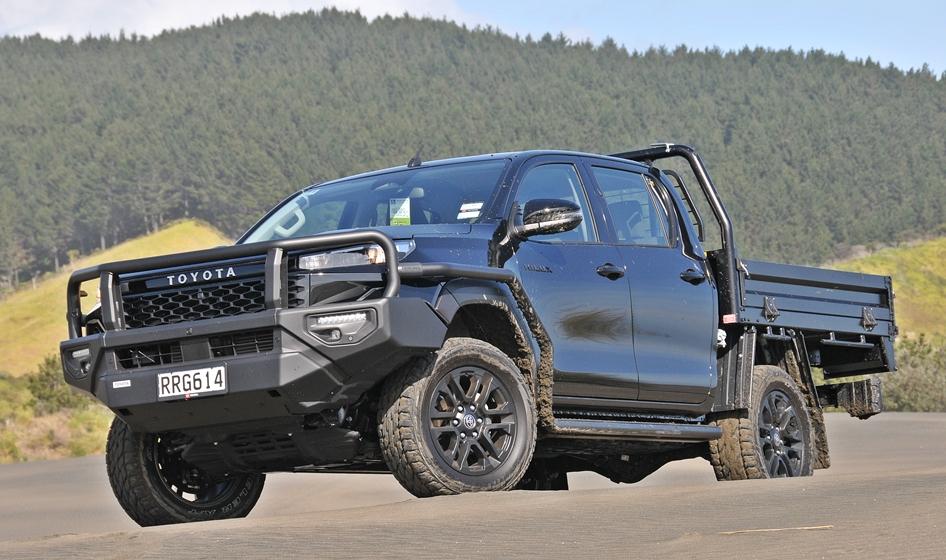
An enduring presence on New Zealand roads, Toyota’s Hilux stands at the ‘hard worker’ end of the ute spectrum, far from the recently-arrived and arguably unproven offerings from brands with minimal ute history. It trades on its unbreakable image and easy availability of parts. 2026 marks 50 years since the Hilux arrived in New Zealand. Many swear by the Hilux for good reason.
In its ninth generation, Hilux retains the outgoing version’s wheelbase, power outputs, part-time 4WD system and cabin cell. Major changes include a new electric power-assisted steering rack, cabin layout, seating and exterior styling.
Less immediately noticeable changes include revised suspension and extra sound deadening.
There are new panels and new tech underpinned by Toyota’s proven 2.8-litre turbodiesel engine which makes 150kW between 3,000-3,400rpm/500Nm between 1,500 and 2,800 rpm. The power unit choice now extends from turbodiesel through turbodiesel with mild hybrid assistance to the new full EV version.
The diesel and diesel/hybrid units are paired with a manual or six speed automatic transmission and part-time 4WD. Today, Hilux is one of a shrinking group of 4WDs that still offer self-shifting, and there’s still a market for that.
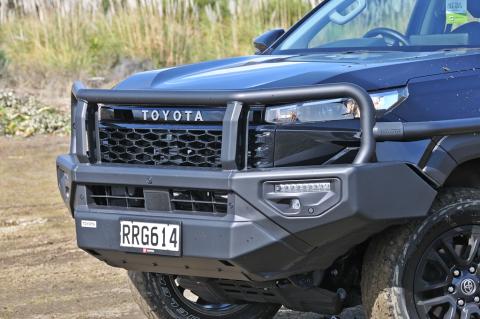
There’s an aggressive front bumper design, tall bonnet height and sculpted arches that create a new ‘family’ design language shared by the new RAV4.
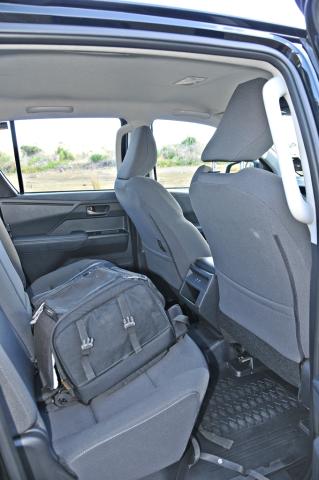
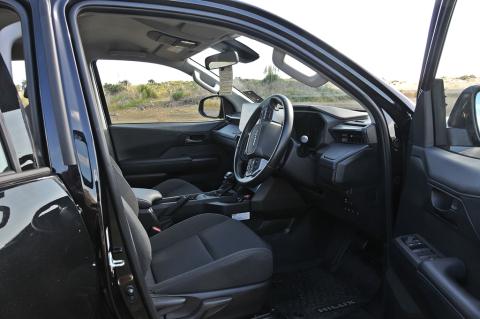
There’s a completely redesigned modern interior offering maximum storage space.
The double wishbone front and live rear axle remain, though up front there are new springs, revised dampers and a 20 per cent stiffer anti-roll bar, plus new spring rates and shocks at the back.
The new Hilux keeps its part-time 4WD system with 2H, 4H and 4L and there’s no centre diff, so it must be driven in two-wheel drive (RWD) on tarmac. It gets a revised traction control module which interfaces with the electronic steering rack and easily tames wheel spin with a tyre off the ground allowing the Hilux to crawl through obstacles, even without delving into its multi-terrain select (MTS) modes.
Axle articulation is also strong in the new Hilux thanks to a revised ladder chassis using thicker gauge steel on the side rails among other changes.
Toyota has also slowed the Hilux’s hill descent control speed from around 6km/h to 3km/h.
From behind the wheel the active safety assist systems were hushed and mostly helpful. Unlike Kia’s Tasman, the Hilux’s speed sign alert can be permanently set to visual reminder, so there’s no high-pitched beeping when it reads the wrong sign.
Electronic power steering is available for the first time on a Hilux to reduce the risk of kickback and increase the weighting at speed for better road manners.
The dashboard has a decent storage cubby and there are hidden cupholders on the flanks, while the screens have swelled to 12.3in apiece running Toyota’s latest Smart Connect system.
Underneath, the side rails of the frame have been thickened and front crossmembers upgraded to account for the EPS and that 500Nm of torque. The front suspension consists of independent double wishbones with MacPherson struts, while the rear gets rigid rear axle leaf springs. The suspension towers get an extra fitting point to deal with the increased front axle load, the damping has been tuned to reduce impacts, the anti-roll bar is more rigid, and the front spring rates are new.
Meanwhile, there are new mounts for the engine and cabin and more spot-weld points to help reduce vibration and improve responsiveness. The electronic parking brake is new.
Hilux also does without a driver attention monitor camera that is otherwise fitted to the likes of Mitsubishi Triton. We were not unhappy about that. Omitting the nag-camera has not affected the fuive star ANCAP safety rating of the ninth-gen Hilux. With the new steering system, lane-keep assist and lane-tracing programs work much more effectively in the new Hilux.
The ute’s tow and payload ratings are key to its long appeal to farmers, tradies and those who work for a living. The tow ratings are standard for the category: 3,500kg braked, 750kg unbraked.
In Aussie, Hilux is now up against Ford’s Super Duty Ranger, which has a 4,500kg maximum towing capacity. Over there, Toyota is fighting back with a factory-optioned GVM upgrade kit for Toyota Hilux promises to raise GVM to 3500kg and increase payload past 1.5-tonnes on select variants. For their Hilux Workmate dual-cab chassis and SR Extra cab chassis variants, payload will exceed 1.5-tonnes. The Japanese brand has listened to customer requests, though, and increased the GCM of all 4WD grades to 6300kg. This means, when towing the maximum braked 3,500kg capacity, leftover payload is improved significantly.
Even so, it is not tipped to answer the 154kW/600Nm Ranger Super Duty directly – a 3500kg GVM falls short of Super Duty’s 4500kg. Luckily for Toyota NZ, then, that the Super Duty is still mired in approvals bureaucracy and gives no firm indication of a New Zealand launch date.
The full range
The 2025 Hilux range starts with a single cab 4WD SR, designed to accept Toyota’s own flat-deck tray. It’s auto-only, 4WD-only.
Stepping up, there’s the SR Extra Cab, which is also auto-only, 4WD-only and offers more storage space behind the seats.
As always, the double cab race is where the big sales action happens. Here, there’s the first sign of a rear-wheel-drive Hilux, the steel-wheeled SR Prerunner, at a fraction under $50,000.
Then there’s the SR 4WD double cab chassis, ideal for a flat deck or service body, and with that rare thing, a manual transmission.
The Hilux SR5 wellside 4WD manual is next, edging up to $58,000.
An SR5 Limited wellside 4WD manual is around $1,500 more but lays on the tech and spec.
Next up is the SR5 hybrid double cab – mild hybrid, that is – at $60,990.
For family-friendly flash, go for the high-spec Hilux Adventure hybrid at $63,990. The Adventure is the point in the model range where a 4WD ute really becomes a multi-use vehicle suitable for weekday heavy lifting and family adventuring at weekends.
Staying with mild-hybrid turbodiesel powertrains, we step across to the SR 4WD double cab chassis (our drive vehicle), priced at $54,990. The SR5 version is $58,990.
Switch to the SR double cab mild hybrid with a wellside and it’s $56,990; the SR5 version is top of the range, coming in at $62,990.
So that’s ten separate Hilux models in the main range, plus of course the BEV version.
Though the outgoing Hilux generation offered one, there’s no GR version in the current range - so far.
Driven
We drove every version we could at the launch. Manual, auto, BEV. All were impressive and all can be seen as the best version of and specific Hilux model to date.
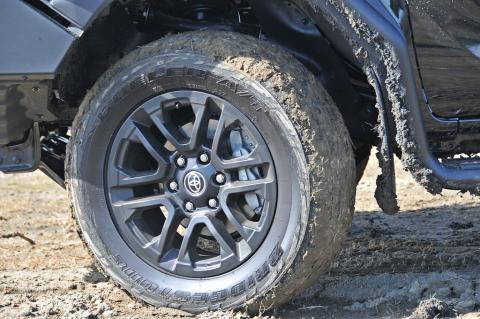
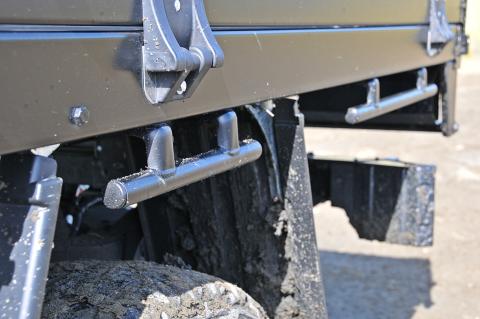
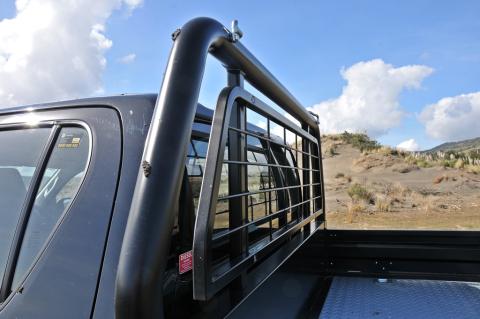
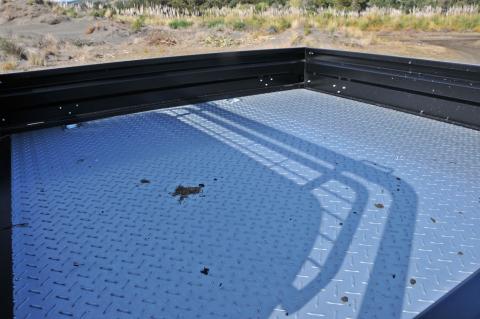
On a longer drive, it turns out that the SR might just represent Peak Hilux. Our drive vehicle is an all black SR cab-chassis auto with Toyota's accessory nudge bar, tougher front bumper and very practical flat deck.
Clever cameras, well-sorted ADAS driver assists, and as a bonus, there's no driver alertness camera to bing-bong nag when it detects your eyes flick briefly 1-2 degrees away from directly ahead.
The new electronic power-assisted steering (EPAS) rack gives Toyota the ability to make the steering lighter around town, while also being weightier and more direct on country roads without being nervous. It’s a game-changer for the vehicle.
We like:
- Smoother, quieter drive
- Effortless off-road capabilities
- User-friendly EPAS
- Improved cabin tech
- Comfort of increased GCM
 ,
,  ,
,  ,
,  ,
,  ,
,  ,
,