


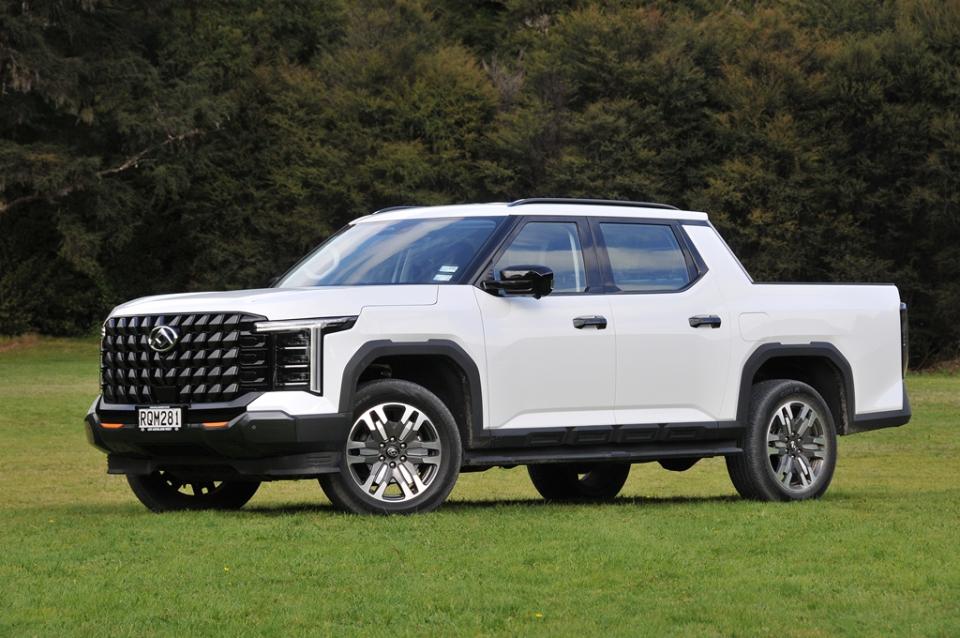
We first saw LDV’s Terron 9 ute at the 2025 Fieldays. We were there as part of a media group to view the Inchcape group’s multi-brand presence.
Aussie’s had Terron 9 since mid-2025, and there have been utes out on New Zealand roads for some time.
So it’s great to get behind the wheel of the big ute for a week as autumn slides toward winter in Godzone.
LDV says the Terron 9 is positioned as a high-value alternative to established players, aimed at both work and lifestyle buyers. We’d agree, especially in the case of the many buyers who need one vehicle that is able to do both.
The “9” is a member of a small but significant group of midsize-plus ute designs, which bridge the gap between smaller utes and the big American stuff. Some of the latter are so massive they require a CoF rather than a WoF and their load capacity requires the driver to have a class two licence. Impressive, but inconvenient.
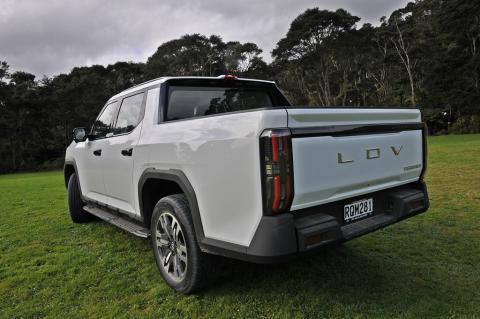
At 5.5 metres long and packing a turbocharged 2.5-litre diesel engine, the Terron 9 is betting everything on the “bigger is better” philosophy. With competitive entry-level drive-away pricing, it’s set to challenge the entry-level to mid-range versions of smaller mainstream rivals, while offering more space and equipment.
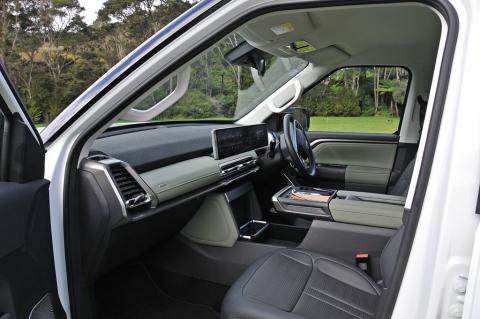
Our first impression suggests LDV might be onto something. The cabin is genuinely large and well designed, and is loaded with tech and features, though the “9” faces criticism from media in Australia for intrusive driver-assist systems and some off-road limitations. Inside, there are dual 12.3-inch screens with sharp graphics in one wide sweep of curved glass and there’s a button-activated 360-degree camera.
Key features, such as 4WD modes and climate controls, are buried in the Terron’s infotainment screen rather than using physical buttons.
Sturdy side steps lead up into the driver’s seat with A-pillar mounted grab handles aiding access if needed – where there’s more than ample hip, shoulder and headroom thanks in part to the long 3300m wheelbase. The front seats are big and comfortable and have wide adjustment ranges along with heating/cooling/massage functions.
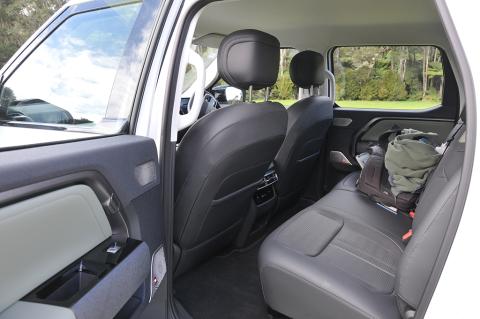
The rear passengers have plenty of legroom, their own air-con controls and the two outer seats are heated.
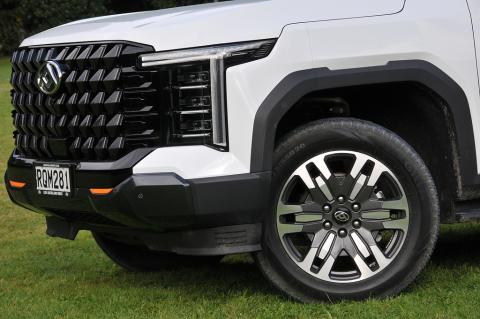
Exterior kit includes auto LED headlights, 18-inch alloys with highway tyres on the Elite or 20-inch on our top-spec Premium test vehicle and a matching full-size spare, plus side steps, roof rails, spray-in tub liner, push-button tailgate with pneumatic assist.
Driven
Out on the road, the Terron 9 felt stable, planted and unstrained under load. Power delivery was smooth and consistent. The chassis remained composed over uneven surfaces.
Both grades of Terron 9 are mechanically identical, with proper full-time 4WD and low range, along with selectable front and rear diff locks.
Up the twisty road into the bush-clad Hunua ranges, the Terron was predictable and easy to place into corners. The unladen rear end didn’t like washboard corrugations very much, though the front end stayed on its line. Heading down into the water dam valleys and old farm paddocks of Moumokai Valley the truck sat at our intended speed without application of the brakes, the engine braking of that 2.5-litre turbodiesel holding pace with ease.
In tight tracks, the big bonnet does make vision difficult at times, but it’s easy enough to learn to use the 360 degree camera views to be sure of wheel placement.
Conclusion
In summary, the 2026 LDV Terron 9 is a large, competitively priced dual-cab ute offering a strong 2.5-litre turbo-diesel (163.5kW/520Nm), eight-speed auto, and 3,500kg braked tow rating. LDV claims a combined fuel economy figure of 7.9 litres per 100km, and there's an 80-litre fuel tank for decent range. We were all over the place with this one, and the variety of real-world driving conditions we encountered meant we couldn’t crack 10.0l/100km.
LDV’s Terron 9 occupies a unique position in the New Zealand ute market. It’s one of only two unibody designs in the midsize-plus subset, it’s one of only two such utes with what many still regard as ‘proper’ rear end when it comes to carrying heavy loads or towing big trailers. It’s also one of the most affordable midsize-plus offerings on the market, with versions priced directly alongside GWM’s Cannon Alpha.
We’d note that the LDV’s engine with its 163kW is a huge leap ahead of GWM’s 130kW.
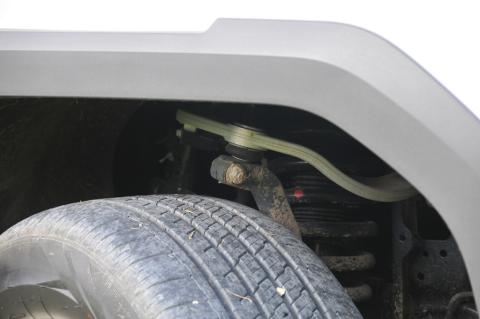
This ute impresses with its big, modern, high-tech cabin and comfortable ride, We’d describe the suspension as big on comfort, being more "SUV-like" than traditional, firmer-riding utes.
And spending time in the tech and spec laden cab of a ute this size definitely spoils the driver for smaller machinery.
 ,
,  ,
,  ,
,  ,
,  ,
,