


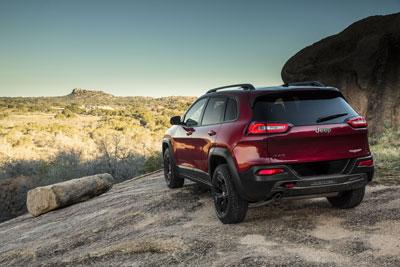
While its outward appearance may be somewhat controversial, the forthcoming Jeep Cherokee boasts some remarkable specifications that promise (on paper, at least) to make it one of the more convincing and capable entrants in the mid-size SUV segment - both on and off road - when it makes its appearance into the local market. The new Cherokee will be the first Jeep to appear on the Chrysler Group’s “Compact US Wide” (CUS-wide) platform, which is a LWB version of the Fiat compact platform found under the Alfa Romeo Giulietta. While that may not sound too promising to the Jeep hardcore, there will be a choice of three 4x4 systems that take the Cherokee from mild to really-quite-capable-indeed. The Cherokee comes with a choice of two engines; a 137kW/232Nm 2.4-litre four-cylinder MultiAir petrol engine and a 199kW/316Nm 3.2-litre V6 petrol engine. According to Jeep Australia, the local Oz line-up will include an unspecified 2.0-litre diesel engine in the model mix. There has been no word on the local New Zealand line up yet. Both engines are hooked up to a new ZF 9-speed automatic transmission that will feature in all models - and here’s where it gets interesting - including the drivetrains with low-ratio. The first of the three drivetrains is Jeep Active Drive I, which features a single power transfer unit (PTU) which is fully automatic and delivers “seamless” operation in and out of four-wheel drive at any speed. The system does not require any driver intervention or feedback, delivers yaw correction during “dynamic events” and improves both understeer and oversteer conditions. Jeep Active Drive II includes a two-speed PTU with torque management and low range. Low range provides a 2.92:1 gear reduction, a crawl ratio of 56:1 when powered by the 2.4-litre diesel engine, and 47.8:1 when powered by the 3.2-litre V6, which iup to a 90-per cent improvement versus the outgoing model. Finally Jeep Active Drive Lock adds a locking rear differential to the Active Drive II drivetrain. All of these systems come with Jeep's Selec-Terrain traction control system and rear-axle disconnect feature. The rear axle disconnect feature, a first for any mid-size SUV, disconnects the rear-axle when four-wheel drive is not needed. This lowers parasitic drivetrain load, improving fuel efficiency Underneath, the Cherokee sports a new front independent suspension with MacPherson struts and a new rear independent multi-link suspension. The front suspension provides 6.7 inches of travel while the rear suspension provides up to 7.8 inches of travel. With the Active Drive II and Active Drive Lock drivetrains, the Cherokee has an approach angle of 21 degrees and a departure angle of 32.2 degrees. The Active Drive I vehicles have an approach angle of 18.9 degrees and departure angle of 25 degrees, while the uprated Trailhawk model will boast an approach angle of 29.9 degrees and a departure angle of 32.1 degrees. Along with the more-hardcore Trailhawk model, the Cherokee will be available in three other versions at launch; the Sport, Longitude and top-range Limited.
Alfa-based Cherokee
News and General
Tuesday, 16 April 2013
Related Articles
Wednesday, 30 September 2026
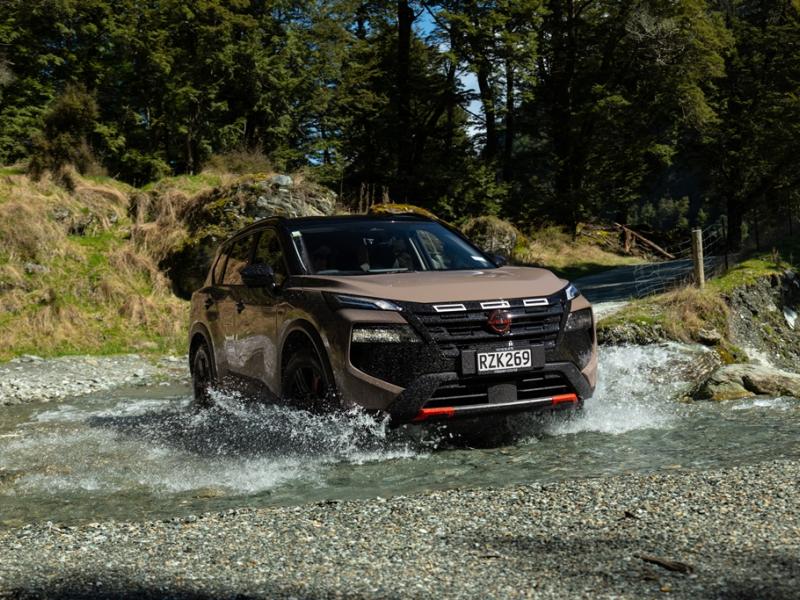
Nissan has marked a quarter-century of X-TRAIL in New Zealand with the launch of two adventure-focused Rock Creek grades, taking the nameplate into its second 25 years with the broadest range it has...
Wednesday, 23 September 2026
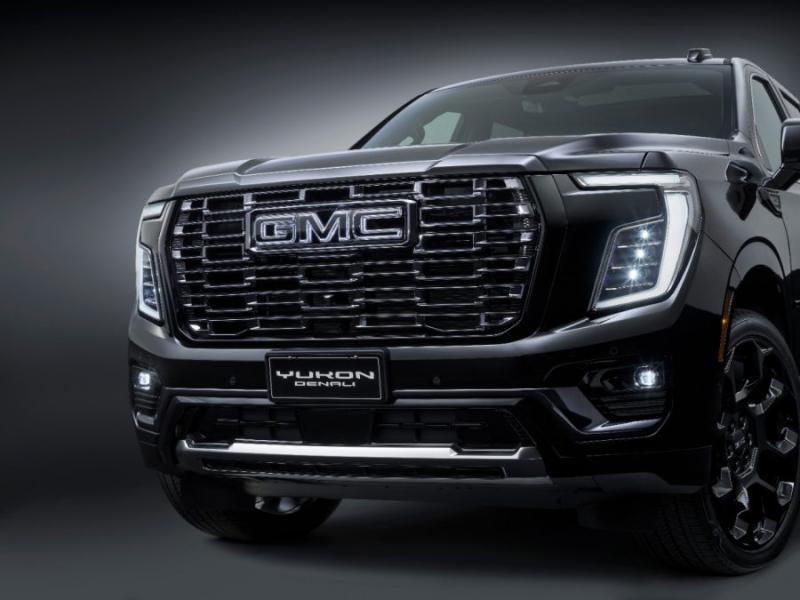
General Motors Australia & New Zealand has introduced the GMC Yukon Denali Signature Black, a locally-specified special edition of the GMC Yukon Denali full-size SUV.
The Signature Black...
Wednesday, 23 September 2026
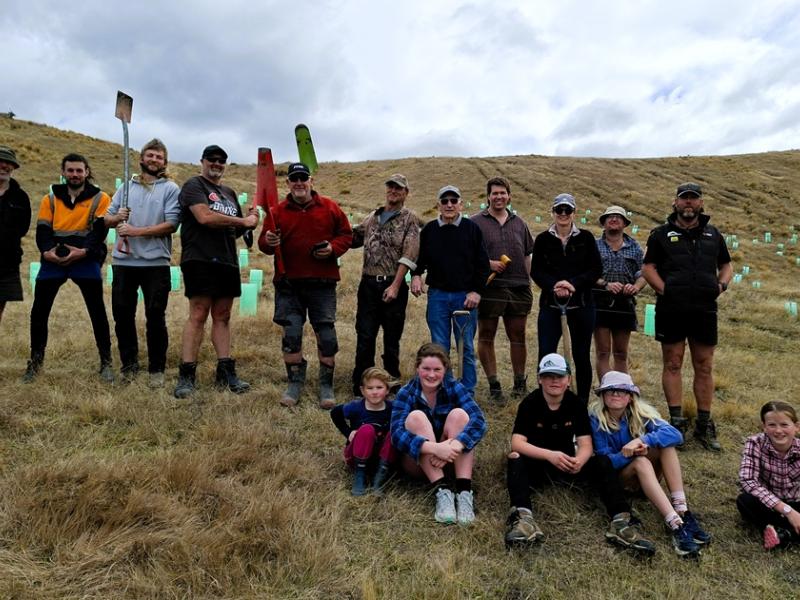
A four-wheel driveclub has joined forces with the Department of Conservation to fund and plant native shrubs and trees to help cover damage done by vehicles.
The Mid Canterbury club helped plant...