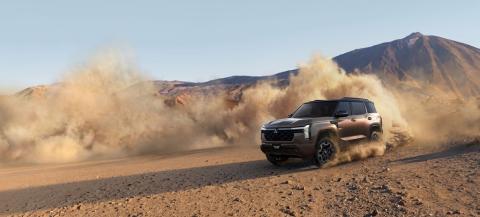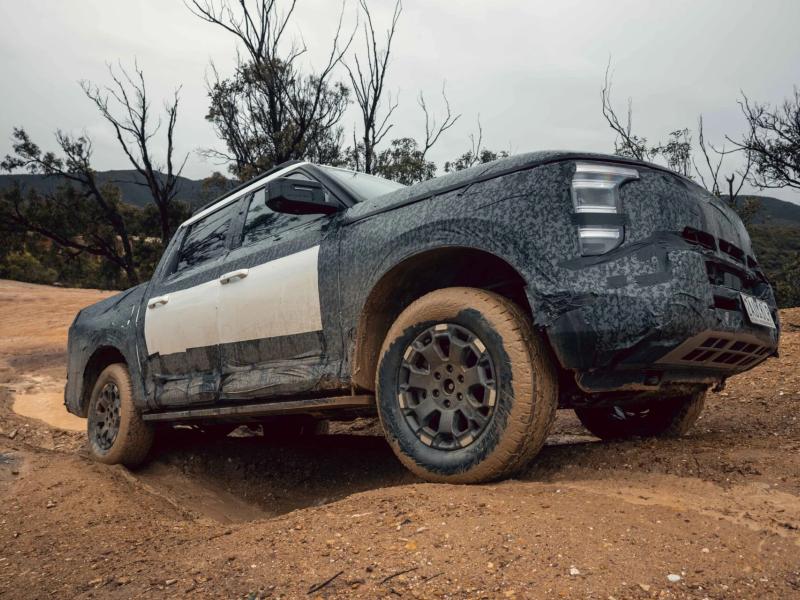



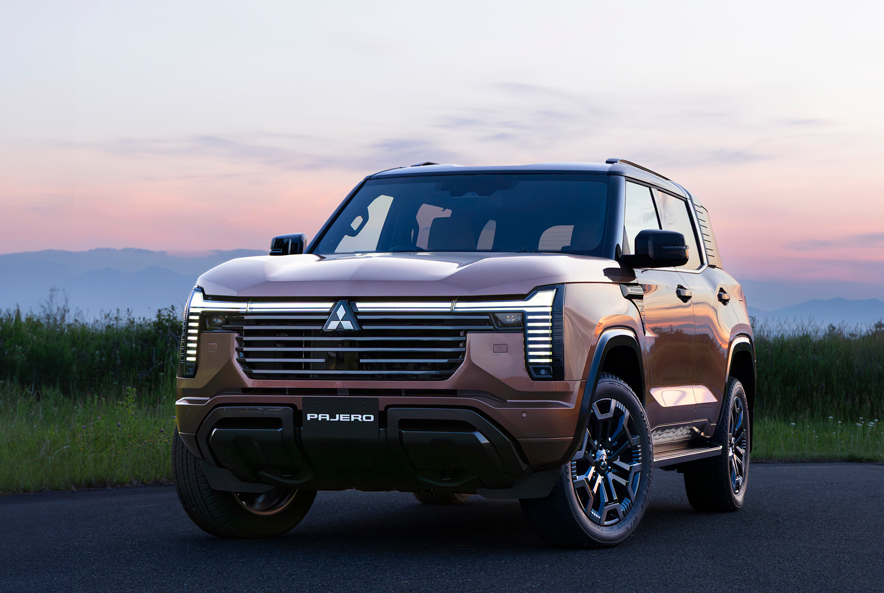
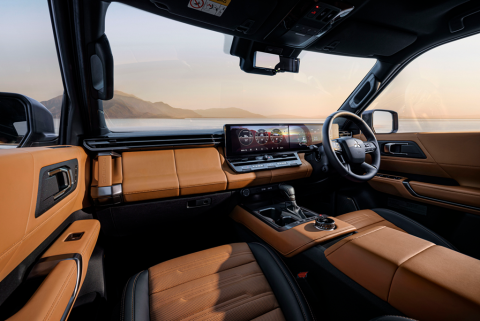
Eleven years after the arrival of the Mitsubishi Pajero Sport, the company has shown its new mainstream Pajero. It is a seven-seat SUV based on the latest Triton and replaces both the Pajero Sport and full-size Pajero. The Sport is still available in New Zealand at $65,000, while the Pajero was dropped in 2021.
Built at Mitsubishi Motors' production base in Thailand, the model will first be launched in the Thai market, followed by Japan and Australia - and probably New Zealand - this year.
In 2027 - its first full year of production - Mitsubishi plans to launch the all-new Pajero in approximately 100 countries.
Though Triton-based, Pajero is regarded as a completely standalone product. Its 2.4-litre diesel engine develops 480Nm (10Nm more than Triton) and drives through an eight-speed automatic transmisison. That is two more than the current Triton or the latest Nissan Navara, which platform-shares with the Triton.
Pajero also uses the familiar Mitsubishi's familiar SS4-II (Super Select) technology with seven selectable drive modes.It is also equipped with Mitsubishi Motors' Super-All Wheel Control (S-AWC), which integrates control of acceleration, cornering, and braking.
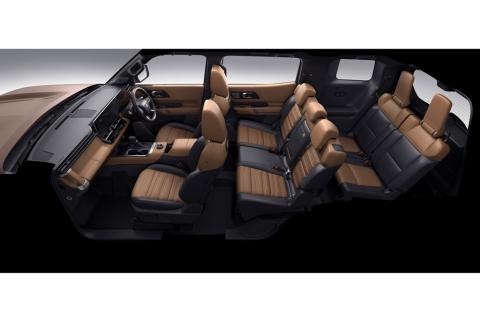
The front suspension is an independent double-wishbone front setup and there's a new five-link rigid rear axle. Pajero remains a three-row, seven-seat SUV. The second row features 150mm sliding range and a 'tumble' mechanism to facilitate access to the third row.
The vehicle is 4,920mm long (slightly shorter than a Toyota Land Cruiser Prado). Ground clearance is 230mm, with an approach angle of 30.4 degrees, a ramp break-over angle of 22.6 degrees and a departure angle of 25.8 degrees.
Its optimised 52:48 front-rear weight distribution and rigid ladder frame complement the long-travel suspension, whose excellent road-holding performance helps maintain tire contact over uneven surfaces. Together, these attributes deliver outstanding performance over challenging terrain.
Active safety features include Emergency Lane Assist (ELA), which uses a forward-facing camera and radar to recognise lane markings and surrounding vehicles. The Pajero is equipped with eight airbags, including Mitsubishi Motors' first SRS centre airbag. The model is also equipped with Front Cross Traffic Alert (FCTA), which detects vehicles approaching from either side at intersections and alerts the driver, helping reduce the risk of crossing-path collisions.
Introduced in 1982, the Pajero was developed as a cross-country 4WD that brought together authentic off-road performance and dependability with passenger-car-like comfort. It went on to earn widespread popularity, particularly among customers with a passion for the outdoors, and became one of the models that drove Japan's RV boom in the 1990s. With total production across four generations exceeding 3.29 million units, the Pajero became one of Mitsubishi Motors' most iconic models, earning a loyal following in more than 170 countries and regions.
 ,
,  ,
,