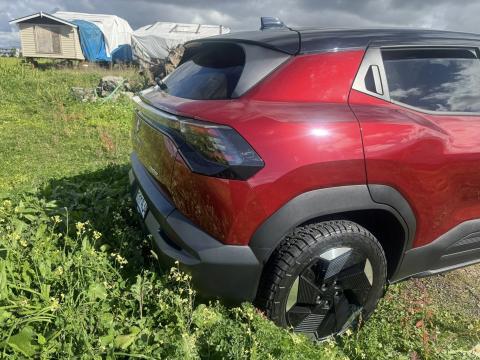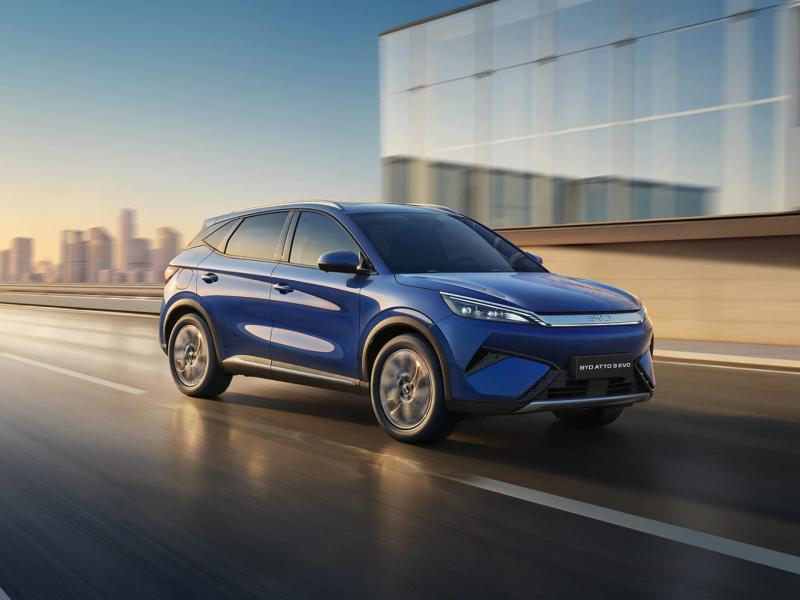



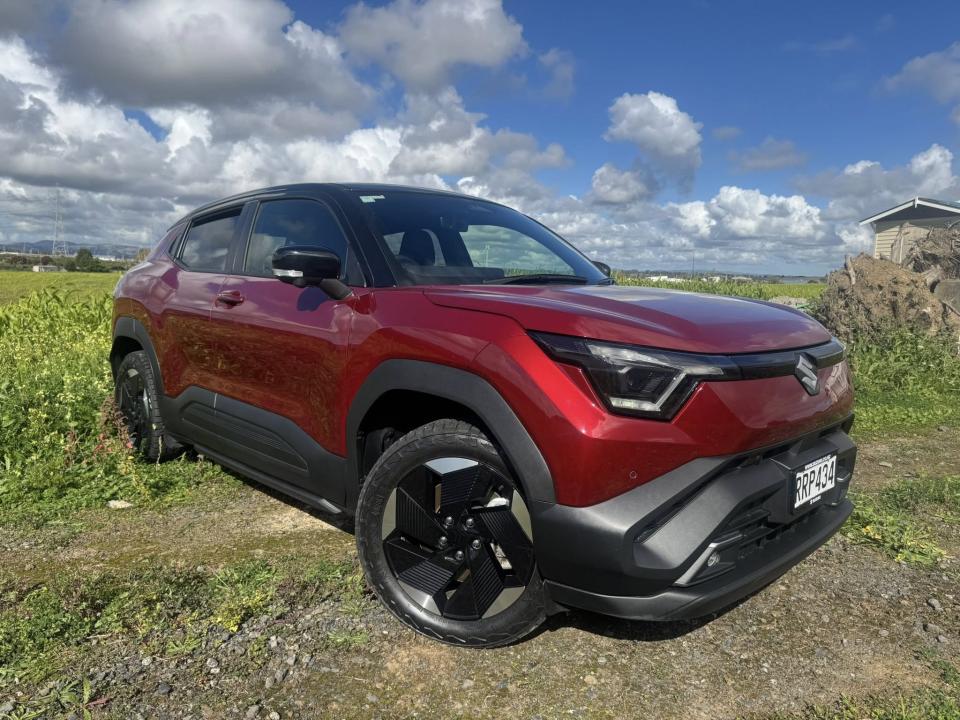
Just had a fairly brief drive of Suzuki’s eVitara on home ground. Had been set for a shortish five days but ended up only getting two-ish due to being double booked.
Still, it was enough to get some idea of how practical the new EV would be as a daily driver.
We waited to get access to the AWD Allgrip version, since the FWD EV SUV is interesting but barely relevant to this site.
The e-Vitara is now on sale and it’s a decent replacement for the outgoing turbo hybrid petrol version.
It’s a bit more expensive, but that’s how EVs are. Until production volumes ramp up, that’s how it will stay – and even then, the rare metals used in the battery systems will spice up the price.
The e-Vitara is now the only Vitara – there won’t be fossil-fuelled stablemates coming later. There are FWD single-motor and AWD dual-motor versions. Suzuki expects to sell about three FWD models to every AWD, but it’s the latter that interests us.
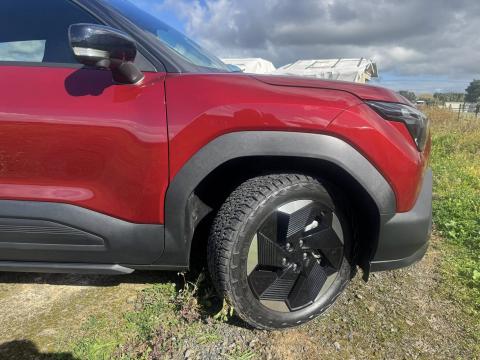
I suspect the red car we drove is one of the AWD cars from the launch as it has the Nexen all-terrain tyres on it that we tried at launch.
Visually, the new model retains a hint of the previous model, but of course it’s all new and is built around BYD’s clever Blade battery, which is built into the floor as an integral part of the chassis. The battery has a 61kW capacity, which is probably fine for urban commuting but would come up a bit short on longer trips.
At 4.2-metres long, the e Vitara is 100mm longer than the outgoing Vitara, and slightly shorter than market rivals like Kia’s EV3 SUV. There’s less overhang than the outgoing model, with all four wheels pushed out to the corners.
This vehicle has a relatively hefty 1900kg kerb weight for the AWD model.
The old Vitara was manufactured in Japan, but the e Vitara comes from Suzuki Maruti, which is the brand’s Indian arm.
Inside, it’s very much a Suzuki family member. The upholstery mixes black cloth with mid-brown synthetic leather accents. Glossy piano black covers the centre console, and the gear selector requires a push-and-turn movement to move from neutral into drive or reverse.
The screen incorporates a 10.1-inch infotainment screen in the dash centre a customisable 10.25-inch digital cluster for the driver.
For navigation, owners will use their smartphones via Apple Carplay or Android Auto.
The driver’s seat has 10-way electric adjustability, while the front passenger makes do with manual seats. Both front seats are heated.
The rear bench will slide fore-aft to accommodate passengers or cargo.
A glass roof offers light and air to the front seat passengers.
This is a practical, city-friendly EV with modern styling and a focus on affordability and efficiency. In AWD format, it’s also a great way to get away for a weekend at the snow or enjoying a break at a backblocks lodge. Just plan charge stops to avoid getting marooned somewhere inconvenient. The range is stated as 390km, but we got a real-world 325km.
While it’s not a hard-out bush-bashing offroader, it has a place in the Kiwi market and will appeal to a range of buyers – we suggest mostly those who’d previously have bought the previous version, with some conquest sales among people who are shopping for an SUV with green credentials who might otherwise be looking at something from the throngs of such vehicles emerging from China.
Driven
So what’s it like?
From the front seats, the e-Vitara has a typical EV ‘feel’. With the battery mounted into the floor, the front-rear weight distribution is always going to be good, and with that weight low down it’s pleasingly calm in the sidehill sections of the offroad course.
The e-Vitara handles predictably, turning into corners smoothly and with slight body roll. Like most EVs, it has un-nerving acceleration away from rest and at low speeds, and the ramp-up of speed is un-unnervingly smooth.
The e-Vitara does deliver.
This is not a hard-out bush basher, as we’ve mentioned. But it’s an accomplished chassis and drivetrain that will deal calmly with dirt roads, wet muddy tracks and more. Not a bad way to sneak away to the snow either.
Suzuki’s designers and engineers have produced a vehicle that is well matched to the needs of its prospective owners – and taken a bold debut step into EVs.
 ,
,