


Fifty years of Hilux in New Zealand. Sixty years of Toyota in this country. Even though Australia loves to lay claim to all sorts of stuff that we own, we reckon there’s a good case for the argument that Hilux is New Zealand and vice versa, much more than it is Aussie.
Consider: Aussie’s much more about Land Cruisers, and especially the 70 series, which is everywhere over there but has only a small toehold among the devoted Toyota fanbase here.
And Aussie didn’t create Toyota’s funny/controversial ‘Bugger’ ads, did they?
Finally, did Aussie have a Crumpy (or Scotty) to spearhead the beginning of the Hilux legend? The closest they’d get would be self-parody from Russell Coight. Russell’s funny, but pretty fake. Crumpy was the real deal. Like Hilux really.
The sensational success of dual-cab utes means that any brand wanting to succeed as a mainstream car manufacturer in Australasia right now needs to be offering a 4X4 dual-cab ute, and Hilux is the model that makes Toyota the brand king.
For a long time, Toyota Hilux was the best-selling dual-cab 4X4 ute for ever and ever, here and in Aussie. Talking to Toyota management I get the sense there’s still some hurt over losing that spot to Ford’s Ranger, but the nature of Hilux was always dead-set focussed on work, with leisure coming after the work was done.
Ranger might have just celebrated ten years at the top in this country, but the fact is, Hilux is still the weapon of choice for many commercial and industrial users and for many government organisations.
In fact, that’s where I first drove a Hilux double-cab when I worked for the Department of Conservation over in Gisborne in the early 1990s. It wasn’t especially grunty, it had a five-speed manual gearbox, and it had wind-up windows but it was a revelation, streets ahead of the other 4WDs in the DoC yard at the time.
The 4WD double cab segment is the largest the country. There are fewer dual-cab ute models on sale, but this segment accounts for most vehicle sales year-on-year.
The model range is extensive, from a tradie-base RWD single cab SR all the way to the top-end double cab Adventure, SR5 and SR5 Limited. The company has also revealed its new full-electric Hilux, which has been developed as "Hilux first, then EV". That makes sense. There’d be no end of complaint if an EV Hilux couldn’t do what a diesel or MHEV diesel Hilux can. Aussie media say the BEV has a fairly reasonably 315km range, though that would drop pretty smartly if towing or lugging a decent payload.
The internal combustion engine range runs from a 2.8-litre four-cylinder turbodiesel in two SR models, stepping up to the 2.8-litre 48V Mild Hybrid diesel in two more (double cab/chassis and double cab wellside).
All up, the range spans the following configurations:
1. SR Grade (Base)
- SR 2WD Double Cab PreRunner
- SR 4WD Double Cab Chassis (Manual)
- SR 4WD Double Cab Chassis (Hybrid)
- SR 4WD Double Cab Ute (Hybrid)
2. SR5 Grade (Mid)
- SR5 4WD Double Cab Ute (Manual)
- SR5 4WD Double Cab Chassis (Hybrid)
- SR5 4WD Double Cab Ute (Hybrid)
3. SR5 Limited Grade (Premium)
- SR5 Limited 4WD Double Cab Ute (Manual)
- SR5 Limited 4WD Double Cab Ute (Hybrid)
4. Adventure Grade (Top)
- Adventure 4WD Double Cab Ute (Hybrid)
5. BEV
The SR5 models are all 4WD, offered with manual or automatic transmission. All double cab automatics get the Mild Hybrid version of the 2.8-litre engine.
Power outputs are 150kW across the diesel range, and frankly irrelevant in the case of the BEV, where the pure linear urge is more about the torque instantly available from the dual electric motors.
In all the diesel versions, torque is 420Nm in manual transmission models and 500Nm in automatics. The EV matches the diesels on torque, splitting outputs fairly evenly across front and rear.
The 48‑volt mild‑hybrid system used on the mid-range and premium model automatics stores energy from braking in a small battery and assists the engine when accelerating or idling. These MHEV systems don’t offer electric‑only driving but they do help reduce fuel consumption and emissions, with an indicative fuel economy of 7.1 – 7.6 L/100 km for 4WD models. Older Hilux models consumed around 8.5 L/100 km. The manual, of course, always returns the best economy. Yep folks, old ways are good ways.
Manual and automatic transmissions are both six speeds, and all 4WD models have the same drivetrain. Drive modes are 2hi, 4hi and 4lo; there are further selectable drive management settings (for off-roading, Toyota’s ‘Multi-Terrain Select’ traction control system uses six different computer-controlled drive modes to adjust to conditions) and downhill assist (the quietest hill descent control we’ve sampled) too. The hill descent system regulates speeds to just 3km/h.
Finally, there’s a selectable diff lock for the rear end if needed.
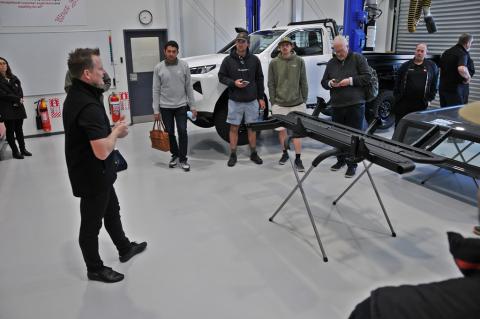
The chassis is Toyota’s tried and true IMV version, built in heavier gauge steel, narrow between the front suspension then widening under the cab which means it comfortably accommodates either EV or diesel drivetrains. After all, the Hilux is first and foremost a work vehicle that needs to survive the tough conditions it’ll be exposed to in rural New Zealand - not a comfy SUV for the school run.
The double wishbone front and live rear axle remain, though up front there are new springs, revised dampers and a 20 percent stiffer anti-roll bar, plus new spring rates and shocks at the back.
Brakes are upgraded to ventilated discs at all four corners in SR5 trims and above, which contributes to a more consistent feel at the pedal and better heat dissipation.
The Noise, Vibration, Harshness (NVH) engineers have applied more insulation to the doors and floorpan, the Hilux upgrades to liquid-filled (rather than rubber) engine mounts and there are an extra 36 spot weld points to the Hilux’s cabin cell to better balance body/frame rigidity and cut undesirable racket.
Safety is – as always – a primary focus. All versions of the 2026 Hilux have achieved five‑star ANCAP ratings. That includes the BEV, which received its stand-alone safety classification during the launch event. The vehicle’s driver‑assist technologies include Toyota Safety Sense, lane departure alert, adaptive cruise control and road sign assist, as well as blind‑spot monitoring and rear cross‑traffic alert.
It was certainly pleasant, though, to drive in all conditions without a driver alertness camera nagging us. Other brands please take note.
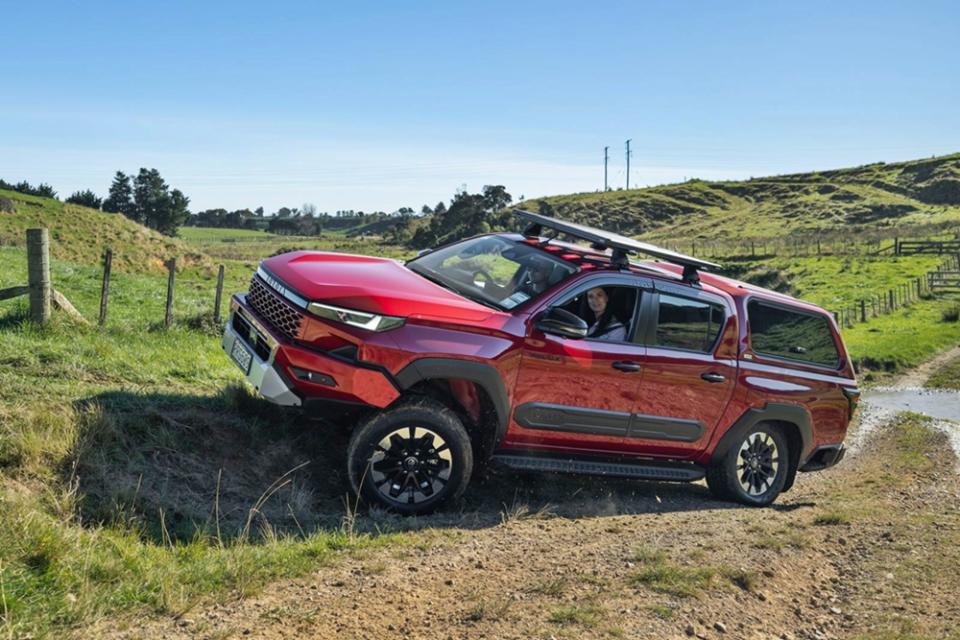
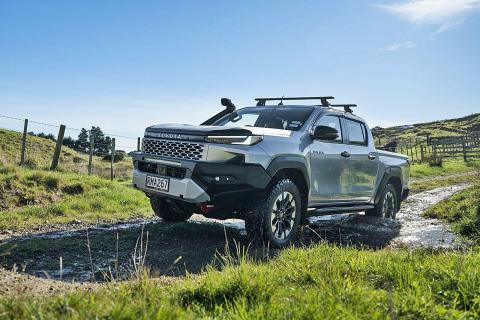
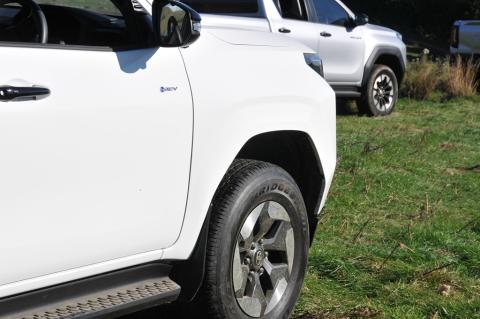
The company has redesigned the Hilux for 2026 with what they call a “cyber sumo” look. A new front grille and slimmer headlights give it a broader stance, which isn’t just about looks – it also helps to improve visibility. A redesigned bonnet has higher side ‘wings’ but dips low in the centre, which helps with sightlines on more technical terrain, while on wellside models there’s a handy rear guard step to make loading easier.
This new look is quite a departure from the previous model, and Toyota has copped some push-back on its styling.
To that we would say “shock of the new” and note that the brands building flat-fronted 4WD utes are also copping complaints. Beauty, as they say, is in the eye of the beholder. Or buyer.
Inside, the cabin has also undergone a transformation with a refined interior and a wider, lower dashboard, digital instrument ‘cluster’ and high‑resolution touchscreen feature, along with USB‑C charging ports and wireless Apple CarPlay/Android Auto.
The shapely seats are all new and make a massive difference with good lumbar support and robust leg bolsters. We did open the centre console stowage box to find a decent air-con breeze chilling the interior. Handy for drinks.
Cabin storage is improved, with cup holders at each side of the dash and space for up to two more cups behind the new gearshift (using removable inserts), a deep centre bin, twin USB-C charge points, a 12-volt socket, dual gloveboxes and doorbins that will – of course - accept a 1.5-litre water bottle.
The stock spec is loaded with features and higher‑grade models offer seat heating, a 12.3-inch infoscreen, and premium JBL audio.
Driven
All Hilux models now have electric power steering, and the revised suspension springing and re-valved shock absorber valving are immediately apparent. The diesel and MHEV diesel versions do handle bumpy surfaces slightly better than the BEV, which does have some rear end ‘chop’.
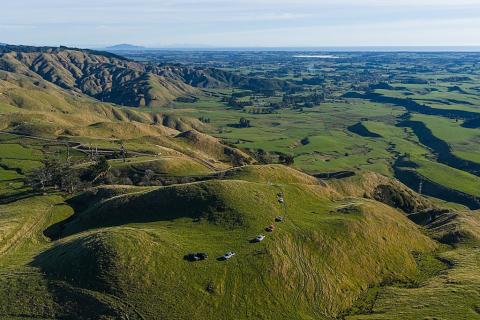
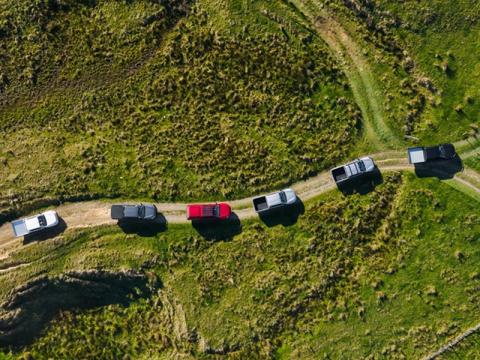
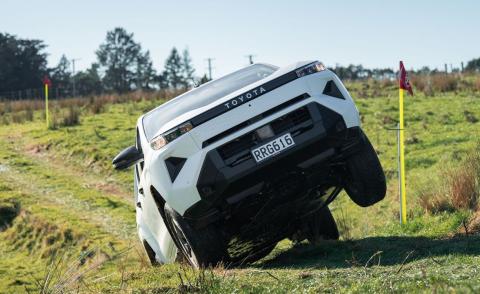
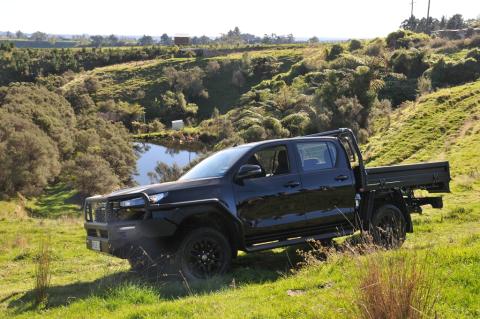
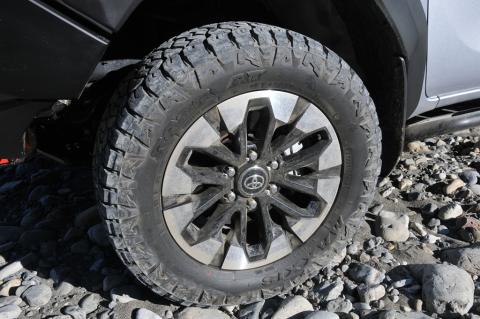
We drove up from the launch farm base near Shannon to do some paddock driving, and 4-hi was really all we needed. We did shift to 4-lo a couple of times but even where the long grass was sopping wet and beaten flat, the Hilux encouraged a gentle approach on the throttle. Likewise when crossing-up the axles to climb steep banks, or crawling through small streams with muddy bottoms.
In the farm section of the drive, we also got to drive the BEV and it was every bit as capable as the diesel offroad. In fact, it was somehow less fussed in the paddocks and driving up the axle-cross banks than the diesels. I’d put that down to the linear torque of those electric motors, which starts as soon as the accelerator is pushed.
On the second day, we drove a loop up and over the ranges, out past Konini on rural tarseal the Hilux could reasonably expect to spend a fair bit of time on. We got a run in the six-speed manual and can report it’s butter-smooth, apparently due in part to Toyota’s ‘iMT’ auto rev-matching.
Out here, the 2.8 hums along at highway speed with very little diesel clatter in the background, and it needs just 1700rpm to maintain 100km/h. This means long-distance touring is less likely to become tiring and bothersome, and it also means fuel economy is likely to be right on the official figure.
When it comes to tackling bends, the Hilux does a commendable job in terms of maintaining good body stability, a desired cornering line, and resisting cornering force.
No ute is ever going to handle as well as a properly-sorted SUV, partly due to live-axle rear suspension and leaf springs, but this is about as good as it gets for a dual-cab ute at the moment. They are made to work for a living, after all.
The steering is precise enough to provide decent confidence and accuracy, and the front doesn’t dip down as you tip it into a corner. It feels comfortable in the turns and is never completely out of its depth. This is not something that could be said of past and some current competitors.
Conclusion
This ninth generation of Toyota’s legendary Hilux is a worthy successor to the outgoing model, and smartly expands the range with that BEV version.
We like:
- Smoother, quieter drive
- Decent handling from tweaked suspension
- Effortless off-road capabilities
- User-friendly ADAS
- Improved cabin tech and spec
- Practicality of increased GCM
PRICING? $49,990 for the entry-level model, and running through to $63,990 for the range topping adventure variant. The BEV Hiluxes are $79,990 for the SR as double cab/chassis, $81,990 for the SR double cab ute and $85,990 for the SR5 double cab ute.
So Toyota has created a vehicle with versions for many key buyers and users. Which one will be the most popular?
in Aussie, it's SR thanks in large part to the use of Hilux on the big farm stations, by the mega-utility companies, the mining industry and government departments.
In New Zealand, the SR5 was the most popular version of the outgoing Hilux generation, which we can understand. Toyota says that trend is likely to continue here.
- Farmers, fleet buyers and government departments often choose the SR 4WD cab‑chassis for its simplicity and payload.
- Tradies may value the SR5 or SR5 Limited for the comfort and safety tech.
- Weekend adventurers will gravitate towards the Adventure model – named for exactly that purpose. It combines hybrid efficiency with premium tech.
- For around town hauling, the 2WD Hilux Prerunner could be all that’s needed.
- Corporates wanting to demonstrate a commitment to the environment will likely lean toward the new BEV, as will some big utility companies and government agencies.
 ,
,  ,
,  ,
,  ,
,  ,
,  ,
,  ,
,  ,
,